Home
Sponsors
Films
Schedule
Updates

Films & Synopses

Peace of Mind
One Day Crossing
All My Loved Ones
Tsipa and Wolf
Deaf Heaven
Passengers
A Brivele Der Mamen
The Barracks
Young at Heart
Mamadrama
Matrilineal
Make Me a Match
Uncle Chatzkel
Late Marriage
Next Time Dear G-d, Please Choose Someone Else

Peace of Mind

CATEGORY: FEATURE LENGTH DOCUMENTARY
Program Length: 56:40 MINUTES
Country of Origin: USA
Language: English (minimal Hebrew and Arabic- w/ English subtitles)
Date Completed: June 1999
Producer / Director: Mark Landsman
Youth Producers: Yaron Avni, Reut Elkouby, Bushra Jawabri, Amer Kamal, Sivan Ranon, Hazem El Zanoun, Yossi Zilberman
Executive Producer: Susan Siegel, Global Action Project
Editor: George O’Donnell
Music: Craig Hillelson, Mike Kelley, Makia Matsumura
Broadcasts: Nightline, WABC-TV (1/00,and 5/01) ,Channel 9 Australia, TVE Spain, Mico Channel NHK Japan, KQED San Francisco PBS local, Free Speech TV, Manhattan Neighborhood Network, Paper Tiger/Access Orbit, NPR Radio "Connections"

Coexistence Through the Eyes of Palestinian and Israeli Teens
From 1997-1999, seven Palestinian and Israeli teenagers were each given their own video camera to document two years of their lives in Israel, the West Bank and the Palestinian Authority. Using cameras as video diaries, the youth turned the lens on themselves, their families, friends and communities, revealing the internal and external challenges each one of them faces as peace seekers in a fiercely divided conflict.

This film is an intimate portrait of a conflict rarely seen from a youth perspective. The story centers around the youths’ efforts to listen, learn and visit each other in their homes, amidst bombings and volatile peace talks that threaten their security. They met at a camp called Seeds of Peace, in the idyllic woods of Maine. This film chronicles what happens when they return to their homes, to their segregated communities, amidst fear, mistrust and hatred of the other side
.

Quotes about Peace of Mind:
What you will care about when all is said and done is the bitter sweetness of this film we are about to show you, It is the sweetness of hope highlighted against the stark bitterness of expectation. They are passionate… they are fearful…they are realistic…they are determined…they are idealistic… Tonight …Palestinian and Israeli youngsters working for peace.

Ted Koppel
ABC News NIghtline

Peace of Mind broke through the curtain of fear and disinformation that has existed for so long between Israelis and Palestinians. By bypassing the usual suspects- politicians and media personalities – we were given a fresh and uncensored view of the conflict. The innocence and honesty that is portrayed by the Palestinian and Israeli youth make this film very special…
Those interested in the future of the peace process must take a serious look at what the fruits of peace will be once the seeds of peace mature and flourish.

Daoud Kuttab
Director of the Institute of Modern Media

"An enlightening and moving experience…poses searching questions and undermines preconceptions."
The Jerusalem Post

"Strong images that reflect harsh realities…really moving…reflects the future without denying the past."
Hala Taweel, President, University of the Middle East

"An extraordinary documentary…promotes coexistence and understanding of realities, anxieties, fears and hopes."
Dr. Reinhardt Freiberg, Former Director of Communications,
UNICEF and UNESCO

"Powerful…expresses the desire of youth to develop brave friendships…after years of conflict, suspicion and violence."
Ha’Aretz

Press: Partial Listing: The New York Times, Newsday, Jerusalem Post, The Independent (AIVF), NY Times UPFRONT Magazine Cover Story, The Forward, Sun Journal/ Maine, NJ Jewish Standard, Palm Beach Daily, Maine Sun Journal.

Awards: Hamptons International Film Festival * Audience Award: Best Documentary. Canyonlands Festival: Most Inspiring Film

Festivals: Partial List: Jerusalem, Tel Aviv, and Haifa Cinemateques in Israel; The Hamptons International Film Festival, Sundance, Human Rights Watch, Canyonlands, Northhampton, Jewish festivals in: Montreal, Palm Beach, Denver, San Francisco, Jewish Festivals in: Boston, Portland, San Diego, Sacramento, Tucson, North Carolina, St. Louis, Hartford, Rochester, Seattle, Denver
Additional screenings; Yerba Buena Cultural Center in San Francisco, Margaret Mead High school screening program, Interfaith Center, Makor, Lincoln Center, Universities: Brandeis, American, Harvard, Brown, Santa Cruz, New Mexico, Ohio,NYU

Showing Sunday March 3 at 3:00pm at the Minneapolis JCC.
Includes lecture by Eric Black, Minneapolis Star Tribune reporter on the topic “Parallel Realities.”
Moderated by Rabbi Harold Kravitz, Senior Rabbi Adath Jeshurun Congregation.
Reception following the film.
This film will be repeated Monday March 4 at 7:30pm at the Minneapolis JCC.

Back to Top

One Day Crossing

YEAR: 1999
DIR/PROD: Joan Stein
COUNTRY: USA/Hungary
LANGUAGE: Hungarian w/English Subtitles
TIME: 25
SOURCE: Director

MINNESOTA PREMIER
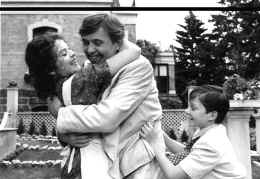
Budapest, October 15, 1944. The Hungarian Arrow Cross is growing in power as the Germans lose the war and Allies and Soviets gain ground. A young mother (Theresa, formerly Sarah) poses as a Christian to protect her son, Peter (formerly Benjamin). But then her husband brings home a Jewish boy he saved from execution. Bravery and anger fuel this intensely moving story of moral responsibility and simple humanity in a horrific world.

Screened at New Directors/MOMA, March 2000, Film Society of Lincoln Center;  SFJFF Summer 2000. Made in homage to the director’s grandmother who saved three of her five children, and her uncle who was killed at age 6 in Budapest.

PRIZES: Winner of a 1999 Ralph Lauren Polo Development Fund grant.

Showing as part of a series of short films on “Relationships” Wednesday March 6, 7:30 PM at the Minneapolis JCC.
Back to Top

All My Loved Ones

YEAR: 1999
DIR/PROD: Matej Miná
COUNTRY: Czech Republic, Slovakia, Poland
LANGUAGE: Czech with English subtitles
TIME: 93 minutes
SOURCE: Northern Arts Entertainment 
MINNESOTA PREMIER

All My Loved Ones was inspired by the real life experiences of English stockbroker Nicholas Winton, who saved hundreds of Czech Jewish children from the Nazis in 1939.
Set in the cultured and peaceful city of Prague in 1938, before the war, All My Loved Ones follows the stories of five brothers, the Silbersteins, and how their lives gradually change with the changes in theoutside world, the rise of Nazi Germany. The film focuses on David Silberstein, a child, whose whose  parents are tormented by the slowly building terror approaching, and face the unendurable dilemma of whether to send David away to England on one of the transports organized by the real-life Nicholas Winston. The fictional Silberstein brothers represent different facets of Jewish life, and watching the diminution of their separate worlds and destinies, the transition from joyous and colorful family life to the horror of the Nazis' arrival in Prague, the viewer is left with the overwhelming sense of all that was finally lost.  

Prizes: Czech Lion 1999 - Best Actor in a Supporting Role; Festróia -Tróia International Film Festival 2000 - Special Mention; Film Festival Finale Plzen - Audience Award, Prize IGRIC -Best Photography and Best Editing.

** Seattle Jewish Film Festival
** Hartford Jewish Film Festival
** Boston Jewish Film Festival
** San Francisco Jewish Film Festival

Audience favorite awards at many Jewish Film Festivals.

"A wonderful, moving, lovely story of a Jewish family in Prague before the war broke out. How I wish I could write like that--such a beautiful story about little things, and such drama, and such wonderful actors, and music, and fabulous photography. It will have a New York, L.A., Miami release, so if you hear about it playing, I do say Go See It!"
Bobbie L, St Louis.      


Showing at 8:00 Saturday, March 9, 2002 at the Hopkins Cinema 6, 1118 Main Street, Hopkins, MN. Reception following film at the Hopkins Center for the Arts, 1111 Main Street, Hopkins, MN. Earl Schwartz, Director of the Social Justice Program, Hamline University will discuss the film.
Back to Top

Tsipa and Wolf

YEAR: 2001
DIR/PROD: Daniel Gamburg
COUNTRY: USA
LANGUAGE: English, Russian, w/Eng. Subtitles
TIME: 20, video
SOURCE: Daniel Gamburg

A grandson creates a loving portrait of his elderly grandparents, Tsipa and Volf Gamburg. Over a period of six years, San Francisco filmmaker Daniel Gamburg lets them tell their own story of love, loss and love again. Screened at the 2001 San Francisco Jewish Film Festival. 


Showing as part of a series of short films on “Relationships” Wednesday March 6 at 7:30pm at the Minneapolis JCC.

Back to Top

Deaf Heaven

YEAR: 1992
DIR/PROD: Steve Levitt
COUNTRY: USA
LANGUAGE: English
TIME: 29 minutes
SOURCE: Frameline

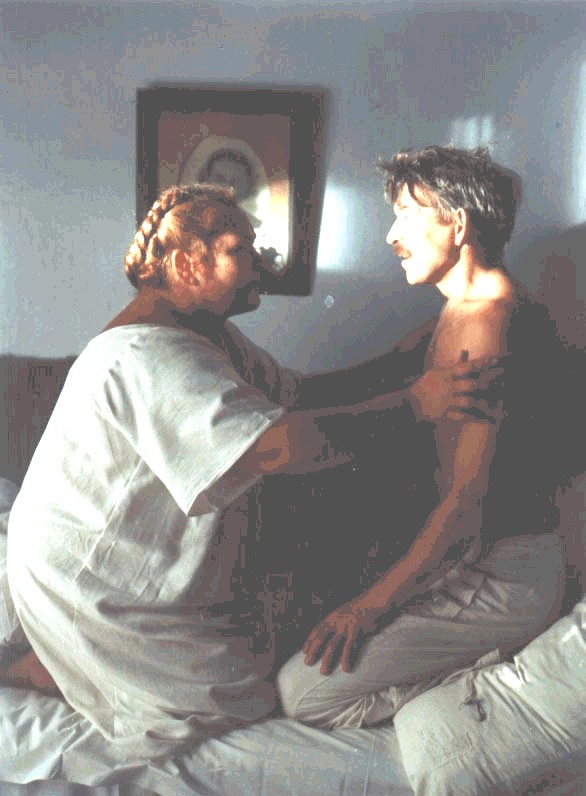
David Opatoshu, the late Yiddish actor, plays Jake, a Holocaust survivor, who meets Paul in a Los Angeles health club. Paul's boyfriend is dying of AIDS. They share stories of guilt, survivorship, strength, and love.

Showing as part of a series of short films on “Relationships” Wednesday March 6 at 7:30 pm at the Minneapolis JCC.

Back to Top

Passengers

YEAR: 2000
DIR/PROD: Francine Zuckerman
COUNTRY: Canada
LANGUAGE: English
TIME: 15 minute
SOURCE: Canadian Filmmakers Distribution Centre 

On the day of her father's funeral, a woman draws on his legacy of love to come to terms with her sexual identity. Seen at the Boston Jewish Film Festival, November 2001.

Showing as part of the “Relationship” series Wednesday March 6 at 7:30 PM at the Minneapolis JCC.
Back to Top

A Brivele Der Mamen  

A Letter to Mother

COUNTRY: Poland
YEAR: 1939
106 minutes B&W
LANGUAGE: Yiddish with English subtitles

Directors: Joseph Green and Leon Trystand
Screenplay: Mendl Osherwitz, Joseph Green, Leon Trystand, Anatol Stern
Music: Abraham Ellstein
Cast: Lucy Gehrman, Misha Gehrman, Max Bozyk, Edmund Zeyenda, Gertrude Bulman, Alexander Stein, Samuel Landau, Simche Fostel, Chana Levin, Itskhok Grudberg, Irving Bruner

A Letter to Mother's tale of family disintegration and poverty serves as a metaphor for the displacements facing European Jews in 1939. One of the last Yiddish films made in Poland before the Nazi invasion, the film tells the story of a mother's persistent efforts to support her family. While her husband lives in America, Dobrish struggles to care for her three children in pre-WWI Polish Ukraine. After her family is pulled apart by severe poverty and the turmoil of war, Dobrish and her family make their way to New York and turn to the Hebrew Immigrant Aid Society (HIAS) in search of a brighter future.

Released on September 14, 1939, two weeks after the German blitzkrieg over Poland, this film opened to packed audiences at the Belmont Theater in New York. Hailed by the New York Times as one of the best Yiddish films to reach America, A Letter to Mother was the highest grossing Yiddish film of its time.

A Letter to Mother was director Joe Green's last film and his "favorite from among his own films... may convey something of the flavor of Green's childhood." J.Hoberman, Bridge of Light: Yiddish Film Between Two Worlds

Showing Sunday March 10 at 10:00AM at the Minneapolis JCC as part of the JCC’s Yiddish Vinkl series.  

Back to Top

Barracks

YEAR: 2000
DIR/PROD: Valerij Ogorodnikov
COUNTRY: Russia
LANGUAGE: Russian w/ English subtitles
TIME: 80 minutes
SOURCE: Maxim Shrayer Arts Agency

This story is situated in the remote industrial town of Satki in the Urals in the days between Stalin's death and Beria's execution (1953). Under the roof of a primitive house a mixed community experiences a collective fate: a war invalid Jora (a Jewish photographer who makes his living by producing pornographic films), a German just released from a prison camp and a mute Tartar. A state militiaman holds the dominant position, maneuvering between his old and new loves - the latter is a girl evacuated from blockaded Leningrad who has nowhere to return to. A woman looking for consolation in alcohol also lives here, as does a former informer, living alone in bitterness. Despite the disputes and feuds, all adhere to one principle: if the doors aren't locked, you are a welcome guest. The film's protagonists are a sample of the "unified organism" of Soviet society and the house is the eloquent symbol of the Stalin era. The director dedicated the film "to our parents" - the generation which managed to be happy despite the shocking living conditions. The entire scale of black-and-white and color was used in shooting the film. Amateur actors also contributed to the film's strength.


Showing  at 3:00 Sunday March 10 at the Minneapolis JCC.
Reception and sale of Russian merchandise after the film.

Back to Top

Young at Heart

COUNTRY: USA
YEAR: 1987  
LANGUAGE: English 
Video 30 min.

Winner of the 1987 Academy Award for documentary subject, this is an especially endearing film about a widow and widower, both artists, who meet in their eighties, court and marry.  It is a joyous, moving, amusing and delightful film that reinforces the positive and creative.

Showing at 1 pm Wednesday,  March 13, at the Minneapolis JCC.

Back to Top

Mamadrama

THE JEWISH MOTHER IN CINEMA

COUNTRY:Australia
YEAR:2000
16mm, 76 min.
LANGUAGE: English
Director: Monique Schwartz
Print Source: The National Center for Jewish Film

“The Jewish mothers that I know and love are sexy, smart, and strong, but I have never seen this mother in Hollywood movies, and I set out to find out why,” Filmmaker Monique Schwarz

Mamadrama combines film clips, cultural commentary, interviews with Hollywood and Israeli filmmakers and footage from Schwarz’s earlier films in an exploration of the image of the Jewish mother in film beginning with early silent and Yiddish films up through contemporary movies. Hollywood directors Paul Mazursky, Paul Bogart, Larry Peerce and actress Lainie Kazan reflect on their Jewish mothers. Critics Patricia Erens, J. Hoberman, Michael Medved, Amy Kronish and Sharon Rivo discuss the changing image of the Jewish mother on screen. Israeli filmmakers Avram Hefner and Zepel Yeshurun and actress Gila Almagor illustrate the uniqueness of Israeli filmic images.

Mamadrama includes selections from Come Blow Your Horn, Goodbye Columbus, Next Stop Greenwich Village, Jazz Singer, Portnoy’s Complaint, Where’s Poppa, Torch Song Trilogy, a compilation of rare Yiddish films and recent Israeli features.  

Showing Wednesday March 13 at 7:30pm at the Minneapolis JCC (along with Matrilineal).
Post-film discussion led by Professor Riv-Ellen Prell, University of Minnesota.

Back to Top

Matrilineal

YEAR: 2001
DIR/PROD: Caterina Klusemann
COUNTRY: USA
LANGUAGE: English
TIME: 27 minutes
SOURCE: Director

Student film (Columbia). Four women trying to free themselves of a secret that has lasted 50 years.
The director writes: Matrilineal is the story of my grandmother, mother, sister, and me. After my father's death the four of us lived tightly bound in our villa in Tuscany My sister and I had Italian friends, and played Italian games. But within their home, a foreign world reigned. Spanish, Polish and German were spoken. And my grandmother cooked the strangest dishes, that she called borsht and kasha, and in the mornings, she's even eaten herring with raw onions. I, raised on pasta, could not understand. There was no other family. My mother was like a helpless child, bound inextricably to my ice-hard and iron-strong grandmother. I studied my other and my grandmother's Venezuelan passports and wondered what it meant that my mother was born in Lvov, Poland in 1940.  Why were the names on the documents and papers never twice written the same way? I was afraid to ask and afraid of the answers I would get and never dared to speak if the camera was not protecting my heart. Thus was the material for this film gathered. The camera follows my quest and my fears, jerks back from my grandmother's rage and looks away from my mother's pain, and yet it is always looking back, determined to ask for answers, to find the truth of the past.
The film was shot over the past four years. Her hard and strong grandmother is shown as the keeper of the secrets. She is the beautiful center of the family's lives. The film challenges the notion that trauma must be inherited through the generations and show hoe, when the silence is finally broken, a family is brought together.
Caterina currently resides in Berlin.

Prizes: Awarded the Zuruckgeben, Stiftung fur Judische Frauen in Kunst und Wissenschaft. Received the New Line outstanding filmmaking award.

Description from Washington Jewish Film Festival:  

All her life, filmmaker Caterina Klusemann believed she was of Venezuelan-Polish Catholic ancestry. Unbeknownst to her, both her grandmother and mother were Jewish survivors of the Holocaust. Matrilineal is her intensely personal documentary that follows these three generations of women after this truth is revealed. Knit together from home movie footage, the film challenges the notion that trauma must be inherited and shows how, when the silence is finally broken, a family can be brought together.

Showing with Mamadrama Wednesday March 13 at 7:30 at the Minneapolis JCC

Back to Top

Make Me a Match

Documentary,USA, video, 76 minutes
Directed by Allen Mondell and Cynthia Salzman Mondell

Filled with hope and humour, trials and tribulations, this entertaining documentary captures the passion of Jewish singles looking for a match in today's America and the extent to which they will go to find a "catch." From Morristown, New Jersey to Crown Heights, Brooklyn to Dallas, Texas to San Diego, California, the film introduces viewers to diverse styles of matchmaking. Witness a rabbi and rebbetzin's probing questions as they interview prospective clients the "old style" (but with a laptop); sit-in on a round table session with 24-enthusiastic suburban matchmakers as they ponder the dating lives of their clients; see how singles are searching and finding their Jewish better halves over the Internet. A film that brings a whole new meaning to the phrase, "Have I got a nice Jewish boy/girl for you!"


Showing Saturday March 16 at 8:00 at the Minneapolis JCC.

Back to Top

Uncle Chatzkel

Year: 2000
Dir/Prod: Rod Freedman
Country: Australia
Language: Lithuanian, English, Yiddish w/English subtitles
Time: 52 minutes
Source: First Run Icarus Films
MINNESOTA PREMIER

Chatzkel Lemchen has lived through the Russian revolution, two world wars, the Holocaust (when the Nazis and their Lithuanian supporters killed most of his family and fellow Jewish citizens), a communist regime and the transition of Lithuania from Soviet republic to an independent state. Lemchen survived using his skills as a linguist and lexicographer.
At 93, he still lives and works in Vilnius, Lithuania, providing a bridge between Lithuanian, Russian and Yiddish cultures. Lemchen is now regarded as a Lithuanian national treasure because of the dictionaries he created to preserve the Lithuanian language during the Soviet era.
Lemchen's enthralling accounts of the turning points in his life have great historical and contemporary relevance. Incorporating powerful Russian and Lithuanian archival footage, some seen for the first time, UNCLE CHATZKEL helps us to understand the past's relationship to the present, through the life of this extraordinary individual.
But his success belies his sometimes-lonely existence. Years of isolation end when his Australian relatives arrive, including his great nephew, filmmaker Rod Freedman. Who better than Uncle Chatzkel to help these visitors understand their roots?

"What a film! What a tribute! What a man! He calls to mind all the best of the few very best people I've known. For me it sets a welcome standard for all documentaries and for the media in general. It's enough to bring tears - tears of joy for survival of the human spirit." 
 Albert Maysles (Director of "Gimme Shelter" and "Grey Gardens")

"A powerful... family journey to understand the past, rediscover its roots and cement the connections." - Australian Jewish News

"One of the most amazing stories ever told."
The Daily Telegraph

** 2001 New York International Independent Film & Video Festival
** 2001 New York Jewish Film Festival
** 2001 Montreal Jewish Film Festival
** Nominated, Best Documentary and Best Original Score, 2000 AFI Awards
** 2nd Prize, 2000 International Jewish Video Competition
** Finalist, Documentary Category, 2000 ATOM Awards
** Best Music, Documentary, Australian Guild of Screen Composers, 2000
** Honorable Mention, Columbus International Film & Video Festival 2000
** San Francisco Jewish Film Festival 2000
** Hot Docs! 2000
** Vancouver Jewish Film Festival 2000
** Toronto Jewish Film Festival 2000
** Rencontres Internationales du Documentaire de Montreal 2000
** 2001 Miami Jewish Film Festival

** Audience Favorite Award – Best Documentary 2001 Washington Jewish Film Festival

Showing at 7:00 Sunday March 17 at the JCC Minneapolis, 4330 Cedar Lake Road, St. Louis Park, MN.
Post film discussion on Lithuanian genealogy resources with Davida Noyek Handler, International President of the Litvak Special Interest Group. Sponsored by the Jewish Historical Society of the Upper Midwest.

Back to Top

Late Marriage

YEAR: 2001
DIR/PROD: Dover Kosashvili / Udi Yerushalmy, Marek Rozenbaum, Edgard Tenembaum
COUNTRY: Israel / France
LANGUAGE: Hebrew w/ English ST
TIME: 100 in 35mm
SOURCE: Magnolia Films

Late Marriage is a searing portrait of rigid cultural traditions and the tyrannical control they can exert over matters of the heart. Tragic and funny in equal parts, the film marks a highly impressive launch to director Dover Kosashvili's feature filmmaking career.
Handsome and intelligent, Zaza is working on his doctorate in philosophy in Tel Aviv. Yasha and Lili proudly consider their son an excellent catch, so they find it disconcerting that Zaza is still not married at 31. He humours his parents as they expound on the need for him to marry a young virgin and suffers as they take him to meet one "suitable" girl after another. But he is uninterested: In brazen disregard of his parents' strict Georgian tradition, Zaza is in love with the smoulderingly beautiful Judith, a 34-year-old Moroccan divorcee. The situation is a disaster in the eyes of Zaza's family and is made all the worse by the fact that Judith has a six-year-old daughter.
The film delineates the wrenching confrontation between love and familial duty and all the ugliness and desperation that arise from dogmatic adherence to tradition. In one particularly jarring scene, Zaza's extended family storms into Judith's apartment intending to force him to denounce the woman he loves. Yet the mood is not entirely oppressive; on the contrary, Late Marriage is an energetic and lively film, the result of dynamic scripting, editing and art direction. Ebullient moments follow fast on the heels of the most ferocious, deflating scenes, while excellent performances draw us in among the divided loyalties of a family at war with itself, making us laugh even as we cringe.
Late Marriage's spirit is robust throughout; its aesthetic restrained and modern. This is a film with a lot of heart and a lot on the line, a taut and honest exploration of cultural and familial obligations that demands to be seen.

Dover Kosashvili was born in the Republic of Georgia in 1968 and has lived in Israel since 1972. He studied philosophy and cinema at Tel Aviv University. His short graduation film, With Rules (99), received several international prizes including Best Short Film at the Jerusalem film festival and second prize at Cannes Cinéfondation. Late Marriage (01) is his first feature film as writer-director. Seen at the Toronto International Film Festival, September 2001


Prizes: LATE MARRIAGE was an official selection at Cannes, Toronto, Telluride, > >Thessaloniki, London and Vancouver. It won Best Film and Director at the > >Jerusalem Film Festival, 9 Israeli Oscars in all major categories and is > >the > >official Israeli Entry to the American Oscars.

Showing Wednesday March 20 at 7:30 at the Hopkins Cinema 6. Post film discussion and reception at Decoys Restaurant.

Back to Top

Next Time Dear G-d, Please Choose Someone Else

Featuring Milton Berle, Jack Carter, Billy Crystal, Jackie Mason, Jan Murray, Carl Reiner, Joan Rivers, Leo Rosten, Neil Simon, Moshe Waldoks

Director:  Rex Bloomstein
Excerpts:
Glorifying the American Girl (1929, with Eddie Cantor), Broadway Nights (1935, with Fanny Brice), False Alarm Fire Company (1929, with Smith and Dale), Go West (1940, with the Marx Brothers), Show of Shows (TV, 1953, with Sid Caesar, Carl Reiner, Howard Morris), The World According to Me (TV, 1987, with Jackie Mason)
Color and B&W, 90 minutes
LANGUAGE:  English

 
Well-known Jewish stars of today reflect on their Jewish roots, telling anecdotes and stories, while a new generation of young comedians continues this extraordinary comedic tradition. Jewish humor is explored and celebrated through a rich heritage of comic genius from the 1920s to the present.

Showing Saturday March 23 at 8:00 at the Minneapolis JCC. Followed by Jewish Joke Open Mic.

Back to Top