|
A
Bridge of Books
Documentary, USA, 2001, video,
13 min
Director: Sam Ball
English
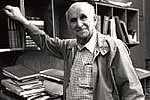 Opened
in 1997, the headquarters of the National Yiddish
Book Center is a lebedike velt - a lively
world full of books, people, programs and exhibitions.
The Center was founded in 1980 when current President
Aaron Lansky discovered thousands of priceless
Yiddish books - books that had survived Hitler
and Stalin - were being discarded and destroyed.
Since then, the Center has recovered over 1.5
million Yiddish books, with the number growing
every day. Director Sam Ball takes us on a fascinating
tour of what has been called "the greatest
cultural rescue effort in Jewish history." Opened
in 1997, the headquarters of the National Yiddish
Book Center is a lebedike velt - a lively
world full of books, people, programs and exhibitions.
The Center was founded in 1980 when current President
Aaron Lansky discovered thousands of priceless
Yiddish books - books that had survived Hitler
and Stalin - were being discarded and destroyed.
Since then, the Center has recovered over 1.5
million Yiddish books, with the number growing
every day. Director Sam Ball takes us on a fascinating
tour of what has been called "the greatest
cultural rescue effort in Jewish history."
Sunday March 9, 2003
at 10:00 AM - Sabes JCC Auditorium.
Motel
the Operator (Motel der Operator)
Feature, USA, 1939, Video,
88 minutes
Director: Joseph Seiden
Yiddish with English Subtitles
Set
in the sweatshops of New York City's garment
district, Motel der Operator is a classic Yiddish
melodrama that also serves as an important historical
document of the American labor movement. Motel,
a poor but hard-working man, loving husband,
and new father, leads garment workers in a strike
for better working conditions. When he is severely
injured by strikebreakers, his wife Esther and
infant son are left destitute. The fate of her
family now uncertain, Esther takes drastic measures
to ensure the safety and health of her child.
Newly restored and re-mastered, the film features
superb performances by well-known American-Yiddish
actors, including the incomparable comic actress
Yetta Zwerling. Rich in beautiful song, Motel
der Operator is a standout in its genre, a bittersweet
melodrama in the finest tradition of Yiddish
Theater.
Sunday March 9 at 10:00
AM - Sabes JCC Auditorium. Sponsored by the
Yiddish Vinkl
Last
Dance
Documentary, USA, 2002, video,
84 minutes.
Mirra Bank, director.
English.
Nudity
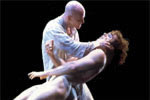 Creator
of such beloved works as “Where the Wild
Things Are” and “In the Night Kitchen,” author
and illustrator Maurice Sendak entered into new
creative territory when he teamed with the world
renowned Pilobolus-Dance Theatre to create a
groundbreaking dance piece about the Holocaust: “The
Selection.” On paper, this partnership
seemed an ideal one; in practice, however, the
sparks flew as the competing visual and physical
energies of the writer, dancers, and artistic
directors attempted to wrest control of the project
from one another. When the dust settled, all
involved succeeded in creating a beautiful, stark
work that won rave reviews from critics and patrons
alike. Director Mirra Bank provides an intimate, “fly
on the wall” perspective of this dynamic,
humorous (and often vexing) creative process. Creator
of such beloved works as “Where the Wild
Things Are” and “In the Night Kitchen,” author
and illustrator Maurice Sendak entered into new
creative territory when he teamed with the world
renowned Pilobolus-Dance Theatre to create a
groundbreaking dance piece about the Holocaust: “The
Selection.” On paper, this partnership
seemed an ideal one; in practice, however, the
sparks flew as the competing visual and physical
energies of the writer, dancers, and artistic
directors attempted to wrest control of the project
from one another. When the dust settled, all
involved succeeded in creating a beautiful, stark
work that won rave reviews from critics and patrons
alike. Director Mirra Bank provides an intimate, “fly
on the wall” perspective of this dynamic,
humorous (and often vexing) creative process.
Winner, Film and Video - The
Arts, San Francisco International Film Festival,
2002
“One of the thrills of the movie is watching the improvisatory trial-and-error
process as the dancers explore psychological themes, contorting their graceful,
amazingly limber bodies into visual representations of relationships and emotional
states.” Stephen Holden, New York Times
Monday March
10, 2003, 7:00 PM -
Oak Street Theater
Sunday March 16, 2003, 7:00 PM -
Sabes JCC Theater
Special Guests: Judith Brin Ingber,
choreographer and dancer; Lou Fancher, dancer and book illustrator
Nowhere
In Africa (Nirgendwo in Afrika)
Germany, 2002, 35mm, 138 minutes
English and German with English Subtitles
Director: Caroline Link
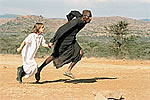 Filmed
on the striking, expansive plains of Kenya, Nowhere In Africa is an inspiring
tale based upon author Stefanie Zweig's best selling autobiography. As
the Nazis rise to power in Europe, Jewish lawyer Walter Redlich makes
a daring escape from Germany to colonial Kenya. Soon after, his wife
Regina (Juliane Koehler from Aimee and Jaguar) and five-year-old daughter,
Jettel, join him at the dusty African farm that will become their new
home. Their initial transition is a rocky one, particularly for Regina,
who longs for her comfortable home in the Prussian town of Breslau. In
time though, Walter, Regina, and Jettel are rolling up their sleeves,
tilling the fields, planting the crops and battling hordes of locusts.
With the help of Owuor, the family cook, and Suesskind, the farm hand,
the Redlich family gradually succeeds in building friendships with their
Kenyan neighbors. But the Great War soon reaches their corner of the
globe. When the guns are finally silenced, the Redlichs face a difficult
decision; to return to post-War Germany or stay in their adopted homeland
of Africa. With its stunning photography, grand themes and international
cast, Nowhere In Africa is an epic in the truest sense of the word. Filmed
on the striking, expansive plains of Kenya, Nowhere In Africa is an inspiring
tale based upon author Stefanie Zweig's best selling autobiography. As
the Nazis rise to power in Europe, Jewish lawyer Walter Redlich makes
a daring escape from Germany to colonial Kenya. Soon after, his wife
Regina (Juliane Koehler from Aimee and Jaguar) and five-year-old daughter,
Jettel, join him at the dusty African farm that will become their new
home. Their initial transition is a rocky one, particularly for Regina,
who longs for her comfortable home in the Prussian town of Breslau. In
time though, Walter, Regina, and Jettel are rolling up their sleeves,
tilling the fields, planting the crops and battling hordes of locusts.
With the help of Owuor, the family cook, and Suesskind, the farm hand,
the Redlich family gradually succeeds in building friendships with their
Kenyan neighbors. But the Great War soon reaches their corner of the
globe. When the guns are finally silenced, the Redlichs face a difficult
decision; to return to post-War Germany or stay in their adopted homeland
of Africa. With its stunning photography, grand themes and international
cast, Nowhere In Africa is an epic in the truest sense of the word.
2003 Golden Globe nomination for Best Foreign
Film
Germany’s entrant in the 2003 Academy Awards for Best Foreign Film
Washington DC Jewish Film Festival, Audience Award for Best Feature Film
Jerusalem International Film Festival, Mayor’s Prize for Best Feature
Saturday
March 15, 2003, 8:00 PM -
Sabes JCC Theater
Special Guest: Richard W. McCormick, Associate Professor, Department
of German, Scandinavian and Dutch
It's
About Time (Zmani)
Documentary, Israel, 2001,
video, 54 minutes.
Elona Ariel & Ayelet Menachem, directors.
Hebrew w/ Eng. Subtitles.
 A
brilliant portrait of the Israeli psyche and
the notion of time in general. In this mosaic
of dialogues with a little girl, a psychiatrist,
an Olympic swimmer, a news editor, a lifeguard,
a stand-up comic and other Israelis, Middle Eastern
time coexists with Western time, Jewish time
rubs shoulders with secular time. From the moment
of birth, man is timed. But for Israelis, time
ticks double speed--pursued by a glorious past,
an uncertain future, and a dubious present. A
brilliant portrait of the Israeli psyche and
the notion of time in general. In this mosaic
of dialogues with a little girl, a psychiatrist,
an Olympic swimmer, a news editor, a lifeguard,
a stand-up comic and other Israelis, Middle Eastern
time coexists with Western time, Jewish time
rubs shoulders with secular time. From the moment
of birth, man is timed. But for Israelis, time
ticks double speed--pursued by a glorious past,
an uncertain future, and a dubious present.
Winner, Best Director
and Best Script, Jerusalem International Film
Festival, 2001
Tuesday March
18, 2003 at 7:00 PM -
Sabes JCC Theater (Israeli Mini Series) together
with It Kinda Scares Me
It
Kinda Scares Me (Tomer Ve-Hasrutim)
Documentary,
ISRAEL, 2001, video, 58 minutes
Director: Tomer Heymann
Hebrew with English subtitles
A
fascinating fly-on-the-wall account of youth
worker Tomer Heymann (also the filmmaker) and
the gang (Hasrutim, in Hebrew), a teenage youth
group from the town of Azur, near Tel Aviv. Shot
over two years by Heymann, the film documents
the relationship between the mild-mannered Tomer
and a gang of tough, nihilistic estate-boys,
who steal and trash his motorbike after their
first meeting.
Tomer and the boys work on developing a play based on their own experiences,
and through this he introduces them to various artist-friends, hoping
to broaden their horizons. Together they candidly discuss sex, violence,
alienation and other issues in what seems like a carefully constructed
piece of group therapy. But this is thrown into turmoil when the homophobic
teens learn that Tomer is gay. While the gang is forced to re-evaluate
their ideas about him in light of their discovery, Tomer has cause to
examine his own role as youth worker and filmmaker of this film. An honest
and sincere document of teenage life told with great warmth, humor and
immediacy.
Best Documentary, Israeli Academy Awards,
2001
Best Documentary Award, Haifa International Film Festival, 2001
Tuesday
March 18, 7:00 PM -
Sabes JCC Theater as part of the Israeli Mini Series together
with It’s About Time
Special Guest: Barak Heymann, producer and screenwriter
Shanghai
Ghetto
Documentary, USA, 2002, 35mm,
97 minutes
Director: Dana Janklowicz-Mann and Amir Mann
English
During
Hitler’s rise to power, many German Jews
scrambled to obtain entry visas to America, Britain,
and other havens. But as Nazi persecution steadily
increased, their chances of finding safe refuge
declined. By the end of the 1930s, most countries
had closed their doors, and it was virtually
impossible to obtain entry visas for the few
remaining places of sanctuary. In fear and desperation,
several thousand German Jews fled eastward to
a place that would still accept them, the only
place in the world that didn’t require
visas:
the Japanese-occupied city of Shanghai in China. Forced to leave their
money and possessions behind, the German Jews arrived in Shanghai practically
penniless. Befriended by local Jewish and Chinese residents and aided
by American Jewish organizations, the refugees struggled to construct
a cohesive community in a squalid, impoverished part of town. Eventually,
they built up a rich cultural and educational life within the “Jewish
Ghetto,” spending the war in relative peace-unaware of the tragic
events taking place in Europe.
“So
often we hear stories of European Jews who stayed in their home
countries, only to perish in Nazi death camps. In that sense, "Shanghai
Ghetto" is a salute to those who were blessed not only with
savvy and courage, but something between an uncanny sense of
foresight and an unforeseen stroke of good fortune.” John
Petrakis, Chicago Tribune.
Thursday March 20, 2003 at 7:00 PM -
Lagoon Theater
Special Guests: Vivian Neiger, born in the Shanghai Ghetto; Dr. Joseph
Ling, resident of Shanghai during WWII and former VP of 3M; Mr. Delin
Qu, Kaifang Jew and Attorney at Law
Between
the Lines (Le’an at Nosa’at)
Documentary, Israel, 2001,
Video, 58 minutes
Director: Yifat Kedar
Language: Hebrew/Arabic/English w/subtitles
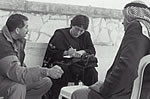 Documentary
filmmaker Yifat Kedar follows Ha'aretz newspaper reporter Amira Hass
for two years, beginning in 1999 when Israelis were optimistic about
the peace process. Hass reports from the Territories, and is the only
Israeli journalist to live within the PA in Ramalla. The only child of
a mother, who survived the Holocaust, Hass grew up in a militant communist
home to become a respected journalist obsessed with uncovering and reporting
the truth. From her unique vantagepoint, she predicts that the situation
is on the verge of exploding. The quality of her daily life deteriorates
as the political situation worsens, but still she remains in Ramalla. Documentary
filmmaker Yifat Kedar follows Ha'aretz newspaper reporter Amira Hass
for two years, beginning in 1999 when Israelis were optimistic about
the peace process. Hass reports from the Territories, and is the only
Israeli journalist to live within the PA in Ramalla. The only child of
a mother, who survived the Holocaust, Hass grew up in a militant communist
home to become a respected journalist obsessed with uncovering and reporting
the truth. From her unique vantagepoint, she predicts that the situation
is on the verge of exploding. The quality of her daily life deteriorates
as the political situation worsens, but still she remains in Ramalla.
Between the Lines won the first prize "Spirit
of Freedom Award" in The International Jerusalem Film Festival
(2001)
Saturday March 22, 8:00 PM -
Sabes JCC Theater (As part of the Israeli Mini-Series)
Followed by a panel discussion on media coverage of the Arab-Israeli
conflict
Kinky
Friedman: Proud To Be An Asshole From El
Paso
Documentary, The Netherlands,
2001, video, 54 minutes.
Director: Simone de Vries
English
 Kinky
Friedman: Proud to be an Asshole from El Paso is as irreverent and outrageous
as its title. The inimitable Richard "Kinky" Friedman first
appeared in the 1970's with a distinctive repertoire of country-rock
tunes that blended the salacious satire of Frank Zappa with the social
consciousness of Bob Dylan to create a heady brew that provoked as much
as it entertained. Kinky Friedman and the Texas Jewboys were truly one
of a kind and their songs, including such trenchant ditties as 'They
Don't Make Jews like Jesus Anymore' and 'Ride Em, Jewboy', which dealt
with the Holocaust, were to put it mildly, the stuff that engendered
protests. With his career flagging in the 80's, Kinky remade himself
into a mystery writer. His fifteen (to date) acclaimed novels feature
a Manhattan gumshoe named, you guessed it, Kinky Friedman, who investigates
murders and other assorted crimes, filtered through a Southern-Jewish
prism that lets him stand out from the pack. With testimonies from fellow
musicians, Willie Nelson and Lyle Lovett, as well as gushing praise from
rabid fan Bill Clinton and comments from Kinky's supportive father, the
film paints a rich portrait of a reclusive, (slightly sad) but forthright
individual. It's proof positive that Friedman deserves more than the
cult status he's been saddled with over the years. It's a real treat. Kinky
Friedman: Proud to be an Asshole from El Paso is as irreverent and outrageous
as its title. The inimitable Richard "Kinky" Friedman first
appeared in the 1970's with a distinctive repertoire of country-rock
tunes that blended the salacious satire of Frank Zappa with the social
consciousness of Bob Dylan to create a heady brew that provoked as much
as it entertained. Kinky Friedman and the Texas Jewboys were truly one
of a kind and their songs, including such trenchant ditties as 'They
Don't Make Jews like Jesus Anymore' and 'Ride Em, Jewboy', which dealt
with the Holocaust, were to put it mildly, the stuff that engendered
protests. With his career flagging in the 80's, Kinky remade himself
into a mystery writer. His fifteen (to date) acclaimed novels feature
a Manhattan gumshoe named, you guessed it, Kinky Friedman, who investigates
murders and other assorted crimes, filtered through a Southern-Jewish
prism that lets him stand out from the pack. With testimonies from fellow
musicians, Willie Nelson and Lyle Lovett, as well as gushing praise from
rabid fan Bill Clinton and comments from Kinky's supportive father, the
film paints a rich portrait of a reclusive, (slightly sad) but forthright
individual. It's proof positive that Friedman deserves more than the
cult status he's been saddled with over the years. It's a real treat.
Sunday
March 23, 2003 7:00 PM - Sabes JCC Theater
5:30 PM Texas
Chili Party ($5) - Reservations a must - Call (952) 381-3499
Ponar
Documentary, Israel, 2002,
video, 54 minutes.
Director: Racheli Schwartz
Hebrew and Yiddish with English Subtitles
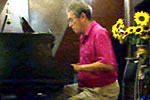 The
Jews used many ways to struggle against the Nazi
system. One way, perhaps the most heroic and
least familiar, was the cultural struggle. Against
the threat of impending death, the horrors of
daily existence and in the most impossible conditions,
a life full of rich, creative and spiritual culture
was established. The film is set in Ponar, the
Vilna ghetto, during the years 1940 to 1943 and
tells the amazing story of the song contest that
was held in the ghetto in the year 1943, a few
months before it was destroyed. The film focuses
on one particular song and its composer, an 11
year old boy named Alek Wolkovsky. The song is
called Ponar in Hebrew, “Shtilar Shtilar” (quietly)
in Yiddish. The words of the song, which tell
of the gloom and doom that had befallen Vilna,
were turned into a lullaby so that the Nazis
would not be able to understand. Sixty years
later, the director, Racheli Schwartz, found
the child - composer, Alexander Tamir,
who had since become a professor of music and
a renowned pianist. The film accompanies Alexander
on his return, 60 years later, to his hometown.
The emotional and moving journey to the past
exposes how culture and art overcame the destruction,
and reaches a peak when Alex gets on to that
very same stage, in the Jewish theater in the
ghetto. He plays the song that won the competition,
which has almost become an anthem. A young Israeli
singer, who is the same age as the singers who
prepared for the competition in 1943 but were
killed before they could actually compete, accompanies
Alexander Tamir’s music. The
Jews used many ways to struggle against the Nazi
system. One way, perhaps the most heroic and
least familiar, was the cultural struggle. Against
the threat of impending death, the horrors of
daily existence and in the most impossible conditions,
a life full of rich, creative and spiritual culture
was established. The film is set in Ponar, the
Vilna ghetto, during the years 1940 to 1943 and
tells the amazing story of the song contest that
was held in the ghetto in the year 1943, a few
months before it was destroyed. The film focuses
on one particular song and its composer, an 11
year old boy named Alek Wolkovsky. The song is
called Ponar in Hebrew, “Shtilar Shtilar” (quietly)
in Yiddish. The words of the song, which tell
of the gloom and doom that had befallen Vilna,
were turned into a lullaby so that the Nazis
would not be able to understand. Sixty years
later, the director, Racheli Schwartz, found
the child - composer, Alexander Tamir,
who had since become a professor of music and
a renowned pianist. The film accompanies Alexander
on his return, 60 years later, to his hometown.
The emotional and moving journey to the past
exposes how culture and art overcame the destruction,
and reaches a peak when Alex gets on to that
very same stage, in the Jewish theater in the
ghetto. He plays the song that won the competition,
which has almost become an anthem. A young Israeli
singer, who is the same age as the singers who
prepared for the competition in 1943 but were
killed before they could actually compete, accompanies
Alexander Tamir’s music.
Tuesday March 25, 2003 at 7:00 PM -
Sabes JCC Theater (Israeli Mini-Series)
Special Guest: Jake Hurwitz, Co-chair, Get Tzsavvy About Tzedakah Worker
Training Mission to Vilna, Prague and Minsk, 2002, a mission of the Minneapolis
Jewish Federation
A
Dream of Mother (Shalom shel Ima)
Documentary, Israel, 2000,
video, 27 minutes
Director: Chava Schein (Hadassah College of Technology)
Hebrew and Ethiopian w/English subtitles
 A
Dream of Mother is the story of Dasesh, a 19-year-old
Ethiopian girl living in Israel with her father
and stepmother. For five years since their
separation, Dasesh has been dreaming of the
arrival of her biological mother from Ethiopia
and is anxious to be re-united with her. When
she finally arrives, Dasesh finds her and her
mother's worlds are vastly different. A
Dream of Mother is the story of Dasesh, a 19-year-old
Ethiopian girl living in Israel with her father
and stepmother. For five years since their
separation, Dasesh has been dreaming of the
arrival of her biological mother from Ethiopia
and is anxious to be re-united with her. When
she finally arrives, Dasesh finds her and her
mother's worlds are vastly different.
Thursday
March 27, 2003 at 6:30 PM -
Minneapolis Institute of the Arts (Israeli
Mini Series) together with Foreign Sister
Foreign
Sister (Ahot Zara)
Feature, Israel, 2000, 35mm,
86 minutes
Director: Dan Wolman
Amharic, Hebrew, w/English subtitles
Poised
for a full-blown mid-life crisis Naomi, just before the breaking point,
meets Negist, an Ethiopian Christian illegal worker. Naomi seems to have
everything; a loving husband, wonderful children and a comfortable home
but she is caving in to the predictability of her life. When she hires
Negist to help in her house, Naomi’s life changes. Parallels emerge
between the world of the two women as they bond in friendship despite
their differences of age, race, and class. Naomi is exposed to the world
of illegal migrant workers and to the racial attitudes prevailing in
Israel toward the hardships these workers encounter. The events of this
award-winning film take place against the backdrop of Israeli society
in which more than 300,000 foreign workers live. Since the 1980s some
80,000 Ethiopian Jews have arrived in Israel with great public fanfare.
Few are aware that among these immigrants are a community of several
thousand Ethiopian Christians. Director, Dan Wolman is one of Israel’s
leading filmmakers and in 1999 was awarded a Lifetime Achievement Award
at the Jerusalem’s International Film Festival. “Foreign
Sister is a small masterpiece, a gripping drama that grabs you with its
honesty and doesn’t let go until the end credits. Slow and methodical,
it takes its time to tell its story and doesn’t feel like it has
to hurry. After the rapid fire pacing of most Hollywood films, this is
a great relief; Writer-director Dan Wolman has done an outstanding job.”
First Prize, The Wolgin Award, Jerusalem
Film Festival, 2000
Thursday
March 27, 2003 at 6:30 PM-
Minneapolis Institute of the Arts (Israeli
Mini Series) together with A Dream of Mother
Hors d’ oeuvres reception preceding film at 5:30 PM.
For reservations send check for $10 to Sabes JCC, Attn: Foreign Sister
reception.
Gloomy
Sunday (Ein Lied von Liebe und Tod)
Feature, Germany/Hungary,
1999, 35mm, 112 minutes
Director: Rolf Schübel
German w/English subtitles
Don't
let the title fool you. This film is anything but gloomy. The film begins
in the present. A wealthy businessman has returned to a Budapest restaurant
for the first time in years. After his meal, he requests a song only
to collapse of a heart attack as it is played. The film takes us back
fifty years. László (Joachim Król) and Ilona (Erika
Marozsán) run the same restaurant in pre-war Budapest. Hoping
to improve business, they hire a pianist, the somber but talented András
(Stefano Dionisi). Ilona soon finds herself torn between the two men.
A regular, Hans (Ben Becker), a German camera salesman, also takes an
interest in Ilona. She rejects his advan ces,
but they all become friends. After the Nazis occupy Budapest, Hans returns
to the scene, but now as an SS officer. Despite their previous camaraderie,
tensions rise to dangerous levels when the friends are reunited. Integrated
into the plot is the melody, Gloomy Sunday, composed by András
for Ilona. The haunting ballad makes the restaurant famous, but it also
seems cursed when people begin committing suicide to it. Avoiding clichés
and melodrama, Gloomy Sunday is an affecting romantic drama; and the
ironic twist ending is one you won't soon forget. ces,
but they all become friends. After the Nazis occupy Budapest, Hans returns
to the scene, but now as an SS officer. Despite their previous camaraderie,
tensions rise to dangerous levels when the friends are reunited. Integrated
into the plot is the melody, Gloomy Sunday, composed by András
for Ilona. The haunting ballad makes the restaurant famous, but it also
seems cursed when people begin committing suicide to it. Avoiding clichés
and melodrama, Gloomy Sunday is an affecting romantic drama; and the
ironic twist ending is one you won't soon forget.
“With a sweeping romantic momentum
from the first scene to the last, the picture and its incredible
music capture our hearts and hold them every spellbinding second.” Steve
Rhodes-Internet Reviews.
Saturday
March 29, 2003 8:00 PM -
Sabes JCC Theater
Special Guest: Leslie Morris, Director of the Center for Jewish Studies
and Associate Professor of German, Univ. of Minnesota
Strange
Fruit
Documentary, USA, 2001, video,
56 minutes
Director: Joel Katz
English
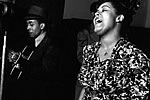 One
of the most important protest songs ever written, "Strange Fruit" was
a staple in Billie Holiday's career. Its lyrics were read on the floor
of Congress during ultimately unsuccessful efforts to pass Federal anti-lynching
legislation, and it has been recorded by dozens of artists since it was
written in the mid-1930's. While many people mistakenly assume that "Strange
Fruit" was written by Holiday herself, the words and music were
actually composed by Abel Meeropol, a New York City public school teacher
and a Jew of Russian immigrant origin who published music under the name
Lewis Allan. Meeropol's best-known composition was "The House I
Live In", most famously performed by Frank Sinatra. The film tells
a dramatic story of American race relations and explores various aspects
of social activism. The film also includes a devastating recitation of
the lyrics by Abbey Lincoln and equally powerful musical performances
by Holiday (from a 1958 BBC broadcast) and Cassandra Wilson. A must see
for music lovers. One
of the most important protest songs ever written, "Strange Fruit" was
a staple in Billie Holiday's career. Its lyrics were read on the floor
of Congress during ultimately unsuccessful efforts to pass Federal anti-lynching
legislation, and it has been recorded by dozens of artists since it was
written in the mid-1930's. While many people mistakenly assume that "Strange
Fruit" was written by Holiday herself, the words and music were
actually composed by Abel Meeropol, a New York City public school teacher
and a Jew of Russian immigrant origin who published music under the name
Lewis Allan. Meeropol's best-known composition was "The House I
Live In", most famously performed by Frank Sinatra. The film tells
a dramatic story of American race relations and explores various aspects
of social activism. The film also includes a devastating recitation of
the lyrics by Abbey Lincoln and equally powerful musical performances
by Holiday (from a 1958 BBC broadcast) and Cassandra Wilson. A must see
for music lovers.
Director's
Statement
STRANGE
FRUIT was first inspired by a letter to the
editor of the New York Times Book Review
in late 1995. In this letter Robby and Michael
Meeropol (the sons of Strange Fruit's composer,
Abel Meeropol) write in response to some
of the questions about "Strange Fruit" raised
by Ned Rorem in his review of a Stuart Nicholson
biography of Billie Holiday. It struck me
that this brief, four paragraph letter read
quite like the script for a film, including
plot twists and dramatic turns that sounded
almost too unimaginable to be actual history.
I began further researching the subject matter
shortly after reading this letter, and filmed
the first interviews during the summer of
1998.The story of "Strange Fruit" also
resonates with parts of my own background.
In 1968, when I was ten years old, my father
(a Jewish man from Brooklyn) began teaching
at Howard University, where he continued
as a Professor in Chemical Engineering until
his retirement in 1986. As a Jew starting
work at the pre-eminent African American
university during the height of the Black
Power movement, he was in a unique and sometimes
difficult position. Over the years there
he went through a wide range of experiences
and emotions about this. Black/Jewish relations
was thus a frequent subject of discussion
at the dinner table I grew up at. Six years
ago I began to teach myself, at a public
university which has a highly diverse student
body (New Jersey City University). Thus I
sometimes feel that I am carrying on the
mantle of my father's work. It has been a
unique pleasure for me to produce STRANGE
FRUIT. I have tried to see it as an opportunity
to try to heal some of the wounds around
race which my father suffered and which all
Americans suffer. Joel Katz 12/22/01
Sunday
March 30, 2003 7:00 PM -
Sabes JCC Theater
The
Secret
Documentary, ISRAEL, 2001,
video, 47 minutes
Director: Ronit Krown Kertsner
English, Polish with English subtitles
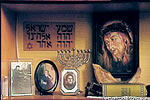 Thousands
of Poles have a secret. They have found out in adulthood that they're
really Jewish, given by their parents, when they were babies, to Christians
for safekeeping during the Holocaust. Now that they know the truth, they
have to decide what this means for them, as Poles and as Jews. In this
remarkable film, Ronit Krown Kertsner profiles some of them, including
determined young men and women who have formed an organization to learn
about Judaism. Most shockingly, she also interviews a middle-aged priest,
who found out he was a Jew at age 35, twelve years after he had entered
the priesthood. Many of these new found-Jews have also become estranged
from their disapproving families after making the decision to practice
Jewish customs and rituals. That's not easy to do in a country with few
Jews and strong vestiges of anti-Semitism. A story of troubled souls
who only now are beginning to find themselves and their place in the
world. Thousands
of Poles have a secret. They have found out in adulthood that they're
really Jewish, given by their parents, when they were babies, to Christians
for safekeeping during the Holocaust. Now that they know the truth, they
have to decide what this means for them, as Poles and as Jews. In this
remarkable film, Ronit Krown Kertsner profiles some of them, including
determined young men and women who have formed an organization to learn
about Judaism. Most shockingly, she also interviews a middle-aged priest,
who found out he was a Jew at age 35, twelve years after he had entered
the priesthood. Many of these new found-Jews have also become estranged
from their disapproving families after making the decision to practice
Jewish customs and rituals. That's not easy to do in a country with few
Jews and strong vestiges of anti-Semitism. A story of troubled souls
who only now are beginning to find themselves and their place in the
world.
Wednesday
April 2 at 7:00 PM -
Sabes JCC Theater as part of the Israeli Mini Series along with
Secret Lives
Secret
Lives: Hidden Children and Their Rescuers
During WWII
Documentary, USA, 2002, video,
72 minutes
Director/Producer: Aviva Slesin
In
1939 there were 1.5 million Jewish children in Europe and by the end
of World War II, fewer than 1 out of 10 had survived. Many of those who
did were rescued through the courageous action of non-Jews who sheltered
these children, hiding them from the Nazis at great personal risk to
themselves and their families. Very few Jewish parents survived the war.
Those who did returned for their children; as for those children, who
were orphaned by the war, the Jewish community reclaimed many. These
separations were heartbreaking and disruptive for both the children and
their rescuers, and many did not see each other again for decades. Aviva
Slesin's intensely personal documentary tells the remarkable stories
of some of these children and their rescuers. An inspirational account
of ordinary people behaving extraordinarily, SECRET LIVES reveals courage
and strength of character under the worst conditions in the history of
human conflict. Slesin was herself one of these "hidden children" and
her experience gives her great insight into the lives of those who participate
in SECRET LIVES.
Producer’s
Note
SECRET
LIVES has its origins in my own story. When
I was 9 months old, I was smuggled out of
a Lithuanian ghetto and hidden with a Christian
couple, passing as one of their children.
They kept me for two and a half years until
my mother, the only member of my immediate
family to survive, returned from a concentration
camp to claim me. My rescuers, who were not
paid to take me in, did so at great risk
to their own lives.
For
most of my life I did not focus on this early
chapter of my history, but after the Iron Curtain
was lifted, I found out that my rescue mother
was still alive, and I went back to Lithuania
to thank her for saving my life. Fifty years
had gone by, and even though I did not recognize
her and had no memories of my time in hiding,
the feelings between us were so powerful that
I was moved to make this film. I wanted to
find out about the emotional connection between
other hidden children and their rescuers and
I wanted to explore the small pockets of goodness
that flourished even in the midst of the evils
of the Holocaust. SECRET LIVES is a tribute
to my rescuers and others like them who transcended
fear, politics, and religious beliefs to save
children. They did so not knowing how long
the war would last, and not knowing which side
would win. I would like the film to stand as
an irrefutable memorial to their courage and
their humanity.
Wednesday
April 2, 2003 at 7:00 PM -
Sabes JCC Theater together with The Secret
Special Guest: John C. Merkle, Chair, Department of Theology, College
of St. Benedict, St. Joseph, Minnesota
The
Following films are co-sponsored by The Children’s Theatre,
this Family Festival of Jewish Film is part of the What's Going
ON Around CTC series. For reservations and information call the
CTC Ticket Office (612) 874-0400 or www.childrenstheatre.org
Almonds
and Wine
Short, Canada, 1999,
video, 6 minutes
Director: Arnie Lipsey
Yiddish and English
 An
animated short set in an Eastern European
shtetl, before the war, a young couple is
introduced to each other and an arranged
wedding is performed. At the height of the
celebration, the convulsions of modern history
intrude. A classic tale of the immigrant
experience, the story is set to rollicking
Klezmer music. An
animated short set in an Eastern European
shtetl, before the war, a young couple is
introduced to each other and an arranged
wedding is performed. At the height of the
celebration, the convulsions of modern history
intrude. A classic tale of the immigrant
experience, the story is set to rollicking
Klezmer music.
Saturday
April 5, 2003 at 8:00 PM -
The Children’s Theatre
God@Heaven
Short, USA, 1998, video,
21 minutes
Director: Joseph Neulight
English
A
little boy sends an e-mail message to God.
Saturday
April 5, 2003 at 8:00 PM -
The Children’s Theatre
Village
of Idiots
Short, Israel, 1999, Video,
12 minutes
Director: Eugene Federenko and Rose Newlore
English
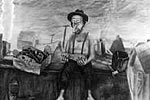 Based
on a familiar Jewish folktale, the charming animated
story of Shmendrik, who leaves his village of
Chelm in search of something better and discovers
a village exactly like his own. Based
on a familiar Jewish folktale, the charming animated
story of Shmendrik, who leaves his village of
Chelm in search of something better and discovers
a village exactly like his own.
Saturday
April 5, 2003 at 8:00 PM -
The Children’s Theatre
Something
from Nothing
Short, Canada, 1999, video,
23 minutes
Director: Stefan LeBlanc
English
A poor tailor makes his grandson Joseph
a wonderful blanket in this warmhearted animation
about love, hope and renewal set in Russian shtetl.
Saturday
April 5, 2003 at 8:00 PM -
The Children’s Theatre
Angel’s
Foot Cake (Der Fus Tort)
Short, Canada, 2001, video,
6 minutes
Director: Sharon Katz
Yiddish and English
Drinkeleh Fresserkeh decides to make
a cake in the shape of an Angel’s foot.
The angels take umbrage and the fun begins. From
Angel’s Foot Cake to angels’ cheesecake,
Sharon Katz serves up a delightfully raucous
modern Yiddish animation.
Saturday April 5, 2003 at 8:00 PM -
The Children’s Theatre
Daniel's
Story
Short, USA, 1993, video,
23 minutes
Director: Stephen Goodell
English
More than a million Jewish children were
murdered at the hands of the Nazis. That tragic
fact is difficult enough for adults to assimilate;
how can one explain it to children? Daniel's
Story, a production of the United States Holocaust
Memorial Museum, attempts not only to personalize
the fate of those children but also to educate
youngsters about the events that led up to that
terrible outcome. Daniel, age 10, is a composite
of the Jewish children who experienced the war.
In a child's voice and language, Daniel recalls
the chain of events that took him from his happy
middle-class German life to the concentration
camps: racial laws that forced him out of school,
the yellow star he had to wear, moving to the
ghetto, losing the people he loved. Photos of
real people and situations enhance the story,
though none too graphic for young children's
eyes.
Saturday
April 5, 2003 at 8:00 PM -
The Children’s Theatre
|